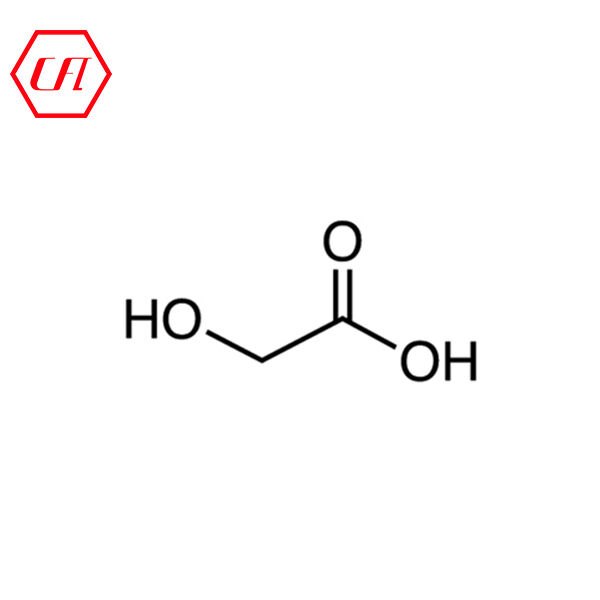
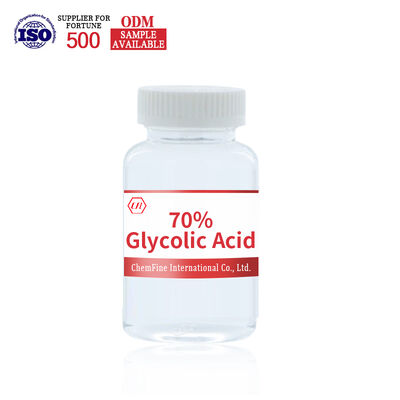
Glycolic Acid, also known by the abbreviation GA, is the smallest and simplest member of the alpha hydroxy acid (AHA) family. It occurs naturally in certain sugar crops and is highly valued for its unique ability to penetrate surfaces efficiently due to its small molecular size. In industrial and commercial sectors, GA is recognized as a powerful yet biodegradable organic acid that offers a safer alternative to many harsh mineral acids. Its dual functionality as both an organic acid and an alcohol allows it to participate in a wide range of chemical reactions, making it a cornerstone ingredient in high-performance formulations.
| Item | Result |
|---|---|
| Total Acid | 70.38% |
| Free Acid | 64.75% |
| Color, APHA | 15 |
| Turbidity, ntu | 1 |
| Chloride as Cl | 2ppm |
| Sulfates as SO4 | U* |
| Iron | 2.44ppm |
| Heavy Metal | 4 ppm Max |
| Appearance | Achromaticity Liquid |
Cosmetic and Skin Care Ingredient
As the most popular AHA, this product is used in chemical peels, anti-aging creams, and acne treatments to promote cell turnover and improve skin texture by dissolving intercellular desmosomes.
Industrial and Household Cleaning Agent
It is a highly effective descaling agent used to remove hard water scale, rust, and mineral deposits from industrial boilers, cooling systems, and household bathroom surfaces without causing heavy corrosion.
Chemical Intermediate and Polymer Synthesis
GA is a critical precursor in the production of polyglycolic acid (PGA) and other biodegradable polymers used in medical sutures and advanced packaging materials.
Textile and Leather Processing Aid
In the textile industry, it is utilized as a dyeing and tanning agent, helping to regulate pH levels and improve the penetration of dyes into natural and synthetic fibers.
Oil and Gas Well Acidizing
It is employed in the petroleum industry to dissolve scale and stimulate production in oil wells, offering excellent chelation properties and thermal stability at high depths.
Glycolic Acid should be stored in a cool, dry, and well-ventilated area. For the liquid solution, ensure storage tanks are made of corrosion-resistant materials such as stainless steel 316, polyethylene, or polypropylene. Keep containers tightly closed and store away from strong bases, oxidizing agents, and cyanide salts. Protect from freezing temperatures, as crystallization may occur in high-concentration solutions; if frozen, gentle warming and agitation will restore the liquid state.
Hydroxyacetic acid, GA, 2-Hydroxyethanoic acid, Dihydroxyacetic acid, Hydroxyethanoic acid.
Glycolic Acid, also known by the abbreviation GA, is the smallest and simplest member of the alpha hydroxy acid (AHA) family. It occurs naturally in certain sugar crops and is highly valued for its unique ability to penetrate surfaces efficiently due to its small molecular size. In industrial and commercial sectors, GA is recognized as a powerful yet biodegradable organic acid that offers a safer alternative to many harsh mineral acids. Its dual functionality as both an organic acid and an alcohol allows it to participate in a wide range of chemical reactions, making it a cornerstone ingredient in high-performance formulations.
| Item | Result |
|---|---|
| Total Acid | 70.38% |
| Free Acid | 64.75% |
| Color, APHA | 15 |
| Turbidity, ntu | 1 |
| Chloride as Cl | 2ppm |
| Sulfates as SO4 | U* |
| Iron | 2.44ppm |
| Heavy Metal | 4 ppm Max |
| Appearance | Achromaticity Liquid |
Cosmetic and Skin Care Ingredient
As the most popular AHA, this product is used in chemical peels, anti-aging creams, and acne treatments to promote cell turnover and improve skin texture by dissolving intercellular desmosomes.
Industrial and Household Cleaning Agent
It is a highly effective descaling agent used to remove hard water scale, rust, and mineral deposits from industrial boilers, cooling systems, and household bathroom surfaces without causing heavy corrosion.
Chemical Intermediate and Polymer Synthesis
GA is a critical precursor in the production of polyglycolic acid (PGA) and other biodegradable polymers used in medical sutures and advanced packaging materials.
Textile and Leather Processing Aid
In the textile industry, it is utilized as a dyeing and tanning agent, helping to regulate pH levels and improve the penetration of dyes into natural and synthetic fibers.
Oil and Gas Well Acidizing
It is employed in the petroleum industry to dissolve scale and stimulate production in oil wells, offering excellent chelation properties and thermal stability at high depths.
Glycolic Acid should be stored in a cool, dry, and well-ventilated area. For the liquid solution, ensure storage tanks are made of corrosion-resistant materials such as stainless steel 316, polyethylene, or polypropylene. Keep containers tightly closed and store away from strong bases, oxidizing agents, and cyanide salts. Protect from freezing temperatures, as crystallization may occur in high-concentration solutions; if frozen, gentle warming and agitation will restore the liquid state.
Hydroxyacetic acid, GA, 2-Hydroxyethanoic acid, Dihydroxyacetic acid, Hydroxyethanoic acid.